Taptap Send: Money Transfer
- 4.7
- Rating
- 10.00M
- Installs
- Free
- Price

 Analysis by App-foxy
Sending money across borders is one of those tasks where convenience matters, but trust matters even more. I spent time looking at how Taptap Send fits into that routine, not just how quickly it can appear useful during the first transfer. Developed by Taptap Send, Inc., this free finance app is designed for transfers to parts of Asia, Africa, and Latin America, with the promise of keeping fees low and exchange rates competitive. My overall impression is that it can become a practical tool for recurring support, provided your destination and payment route suit its coverage.
The app has a strong public reception, with a 4.7 average from around 272 thousand ratings and more than 9 million installs. Those figures suggest that it is not a niche experiment, but they do not remove the need to check the details of each transfer yourself. International money movement is personal: a small difference in the amount received, delivery method, or verification step can matter more than a polished interface.
From the first transfer to a dependable routine
The first-week appeal is easy to understand. Instead of treating international transfers like a complicated banking project, Taptap Send presents the process as a focused mobile task. You choose the recipient and destination, review the amount, and move through the available transfer flow. That direct approach is especially helpful when you are sending money to family rather than managing a business account or making a large financial transaction.
You May Also Like

 Blood Strike: 2.5 Anniversary
Blood Strike’s Loadouts Turn Every Drop Into a Tactical Gamble
A close look at Blood Strike’s custom loadouts: how fast access to signature weapons reshapes its battle royale rhythm, rewards preparation, and narrows the gap between fights.

 Pandora - Music & Podcasts
Pandora’s Music Is Easy to Start, but Harder to Recover
Pandora’s strength is its low-effort path from a seed to a station. Its weak spot is how much confidence it asks you to place in connection, setup, and quiet recovery.

 8 Ball Pool
 Is Built on Rivalries, Rematches, and Routine
A close look at the rivalries, rematches, shared routines, and unanswered safety questions that turn a quick pool match into a persistent mobile community.

 Samsung Music
’s Quiet Strength Is Playing What You Already Own
Its reach comes less from spectacle than from dependable access to a personal library. That simplicity is both the app’s strongest retention engine and its ceiling.

 AccuWeather: Weather Radar
AccuWeather Review: A Quick, Clear Forecast for Everyday Decisions
For everyday plans, the best forecast is the one you can understand quickly. AccuWeather makes rain timing, radar, and local conditions easy to act on, with a few trade-offs.

 Hill Climb Racing
Why Hill Climb Racing Still Turns Crashes Into One More Run
A tiny car, a bumpy hill and one more upgrade: Hill Climb Racing keeps resurfacing because its simple chaos makes every near-miss feel personal.
More From Our News Desk
View All News


I like the fact that the app’s purpose is narrow. It is not trying to be a full bank, budgeting platform, investment service, or general-purpose wallet. That focus reduces the mental effort involved in opening it. When the same person receives support every month, having one familiar place to start the process is more valuable than a long list of unrelated financial tools.
A realistic example would be someone living abroad who sends money to a parent or sibling near payday. The useful habit is to open the app before promising a specific amount, enter the intended transfer, and check what the recipient is expected to receive. That small pause is important because the amount sent and the amount received are not always the same concept in international transfers. I would also confirm the recipient’s details carefully rather than relying on memory from an earlier transaction.
One of the less obvious advantages is that a dedicated transfer app can make the sender more disciplined. Instead of sending through whichever option appears first in a search result, I can compare the displayed cost and expected recipient amount in one place. This is not a guarantee that every transfer will be the cheapest available, but it gives the decision a clear checkpoint before I authorize it.
The first transfer may still involve friction. Financial apps commonly need identity or account checks, and users should be prepared to provide information or wait for a review when required. I would not begin an urgent transfer at the last minute, especially if the recipient needs the money for rent, medication, school expenses, or travel. A service can feel instant in normal use and still require extra time when a transaction needs attention.
Another practical question is whether the recipient needs a bank account, mobile money account, cash collection option, or another supported route. The answer depends on the country and corridor rather than on the app’s general identity. Before building a routine around it, I would check the exact destination and delivery method inside the app. This is one of the most important distinctions between a service that works beautifully for one family and one that is unsuitable for another.
The app is free to install, and its content rating is Everyone, which makes it approachable for a broad audience. That should not be confused with every transfer being free. The real cost can involve the fee, the exchange rate, or both, so I would judge the final recipient amount instead of focusing only on a headline fee. In my experience, that is the fairest way to compare it with a bank, a digital wallet, or a competing remittance service.
Where the recurring value comes from
After the novelty fades, the strongest reason to keep a transfer app is repetition. Taptap Send makes the most sense for people who send money along familiar routes rather than for someone who makes one international payment every few years. If the same sender supports the same household regularly, the app can reduce the number of decisions involved in each cycle.
That recurring value is not only about speed. It is also about reducing avoidable mistakes. A monthly workflow might look like this: check the current quote, compare the recipient’s expected amount with the previous transfer, confirm the recipient information, and save the receipt or confirmation for personal records. This routine helps catch an unexpected change before the money leaves your account.
A useful tip is to separate the planning step from the sending step. I would first decide how much the recipient should receive, then work backward to see how much I need to send. That approach is better than starting with a round amount in my own currency and assuming the other side will receive an equivalent value. Exchange rates and charges can make that assumption misleading.
Another non-obvious trade-off is consistency versus constant shopping around. If you send money often, checking every available service every single time may become exhausting. Taptap Send earns a place on my phone when its usual route is reliable, the displayed result is competitive enough, and the recipient can use the delivery option conveniently. If another provider repeatedly produces a meaningfully better result for the same corridor, loyalty stops making sense.
That is where the app compares favorably with traditional bank transfers for certain personal use cases. A bank may be more familiar, but its international process can involve more formal steps, less transparent conversion, or a workflow designed for larger transactions. Taptap Send feels more appropriate when the goal is regular household support and the sender wants a mobile-first experience.
On the other hand, a bank or established business payment service may be better for invoices, payroll, documented commercial payments, or transactions that need extensive account records. I would not choose a remittance-focused app simply because it is convenient if the payment has legal, accounting, or contractual requirements beyond sending money to an individual.
The maintenance burden no one notices at first
Any finance app creates a small maintenance obligation. The app itself may be simple, but the user still needs to keep recipient information accurate, watch the transfer summary, update the application when necessary, and protect access to the device and account. Taptap Send is currently at version 2.69.0 and supports devices running Android 8.0 or later, so users with older hardware should check compatibility before depending on it.
Maintenance also means resisting autopilot. Familiar recipients can create false confidence. I would still read the name, destination, amount, and delivery details every time, particularly if I have recently changed phones, payment methods, or contact information. A repeated transfer is exactly the kind of task where people rush because they believe they already know what the screen will say.
Keeping a simple personal record is worthwhile. I would note the date, amount sent, amount expected, and confirmation reference in a secure place. This is not because the app is difficult to use; it is because international transfers can become confusing when several payments have similar values. A record makes it easier to answer a recipient’s question without searching through old notifications.
Security habits matter more than interface polish. I would avoid sending account screenshots through casual chats, keep the phone protected, and verify unexpected messages through the app rather than tapping a suspicious request. The app can simplify the transfer, but it cannot replace careful handling of financial information.
There is also a human maintenance burden. The sender and recipient may use different names, phone numbers, or account identifiers in everyday life. Before the first transfer, I would ask the recipient exactly which details and delivery route they expect. This small conversation can prevent the kind of error that no attractive transfer screen can fix after confirmation.
What can cause fatigue over time
The main source of fatigue is variability. A transfer that feels straightforward one month may require extra attention the next if the available route, exchange result, or verification experience changes. Even when the interface remains familiar, the financial outcome deserves a fresh look. I would not treat a previous quote as a promise for the next payment.
Coverage is another possible limitation. The app focuses on selected destinations in Asia, Africa, and Latin America, rather than presenting itself as a universal solution for every country. If your family or clients are spread across regions outside its supported corridors, keeping a second service may be unavoidable. That weakens the appeal of having one permanent transfer habit.
Recipient convenience can matter more than sender convenience. A transfer may be easy to initiate but less useful if the person receiving it has limited access to the supported account or collection method. Before recommending the app to a relative, I would ask how they actually want to access the money. The best route is the one that works at both ends, not merely the one with the cleanest sender experience.
Exchange-rate attention can also become tiring. A low-fee label does not automatically mean the recipient receives the most value. I would compare the final amount delivered with at least one familiar alternative when the payment is substantial or the rate has moved noticeably. For small, frequent transfers, the time spent comparing may outweigh a minor difference; for larger support payments, it is worth checking.
Some users may also dislike the feeling of depending on a specialized intermediary. If you prefer every financial activity to remain inside your main bank, adding another account and another set of notifications may feel like unnecessary clutter. Taptap Send is strongest for people who value a dedicated remittance workflow, not for someone determined to consolidate every transaction under one institution.
There is a subtle emotional fatigue as well. Sending money regularly can become an obligation, and a convenient app can make the process easier without making the responsibility lighter. I find it helpful to set a personal schedule and budget outside the app, then use the app only to execute the decision. That keeps the tool from becoming the place where I make rushed emotional choices.
Who should use it, and who should look elsewhere?
I would recommend Taptap Send to someone who regularly supports people in a covered country, wants a straightforward mobile transfer process, and is willing to review the quote before confirming. It is particularly suitable when the same recipient receives money repeatedly and the sender values a focused finance tool over a broad banking suite.
It is also a sensible option for a user who wants to begin with a free app rather than commit to a paid subscription. The important distinction is that installation costs nothing, while the transfer itself still needs a careful cost check. That is a normal but easily overlooked difference in this category.
I would be more cautious about recommending it to someone making a high-value commercial payment, needing a formal business trail, or sending to a destination or delivery method outside the app’s supported options. A bank transfer or business-oriented payment service may offer a better fit in those cases, even if it feels slower or less friendly.
I would also suggest another option for people who rarely send money internationally and already have a trusted bank service with clear pricing. Installing a separate app is not automatically worthwhile for a one-off transfer. The dedicated experience becomes more convincing when it saves effort repeatedly.
Does it earn permanent space on my phone?
My long-term judgment is positive but conditional. Taptap Send has lasting value when it matches a real recurring need: sending personal support across a supported corridor with a process that feels easier to repeat than the usual alternatives. Its best quality is not novelty. It is the possibility of turning a stressful, irregular task into a familiar checklist.
The app’s 10-million-plus install milestone and broad rating history show that many people have made it part of their transfer habits, while its release in June 2018 gives it a longer track record than a new remittance experiment. I still would not treat popularity as proof that it is right for every route. My decision would depend on the destination, recipient access, final amount received, and how much attention the transfer requires.
If I were advising a friend, I would say to make one small, non-urgent transfer first, inspect every stage, ask the recipient how the money arrives, and record the result. Then repeat the comparison during the next normal payment rather than assuming the first experience settles everything. That test reveals more than a store description: it shows whether the service fits your actual family routine.
In the end, Taptap Send is not a replacement for every bank or payment service. It is a focused tool that can be genuinely useful when its coverage and delivery options line up with your needs. I would keep it installed for recurring personal remittances, but I would continue checking the final recipient amount and maintaining sensible security habits. That balance—convenience without blind trust—is what allows the app to remain useful after the first-week excitement disappears.
FAQs for Taptap Send: Money Transfer
01What is Taptap Send and how does it work?
Taptap Send is a mobile app designed for fast and easy money transfers to various countries. Users can send money directly from their bank accounts or cards to recipients' mobile wallets or bank accounts in supported regions. The app is straightforward to use, ensuring a smooth transfer experience.
02Is Taptap Send safe to use for international money transfers?
Yes, Taptap Send prioritizes user security by incorporating advanced encryption technology and adhering to international financial regulations. The app also partners with trusted financial institutions to ensure secure transactions. Users can have peace of mind knowing their funds and personal information are protected.
03What countries can I send money to using Taptap Send?
Taptap Send supports a wide range of countries, primarily focusing on regions in Africa, Asia, and Latin America. The app continuously expands its reach, so it's best to check the latest supported countries list directly within the app or on the official website for updates.
04Are there any fees for using Taptap Send?
Taptap Send offers competitive exchange rates and low fees compared to traditional money transfer services. While some transfers may incur minimal charges, the app is transparent about any fees before you confirm a transaction, allowing users to know exactly what they will pay upfront.
05How long does it take for the money to reach the recipient?
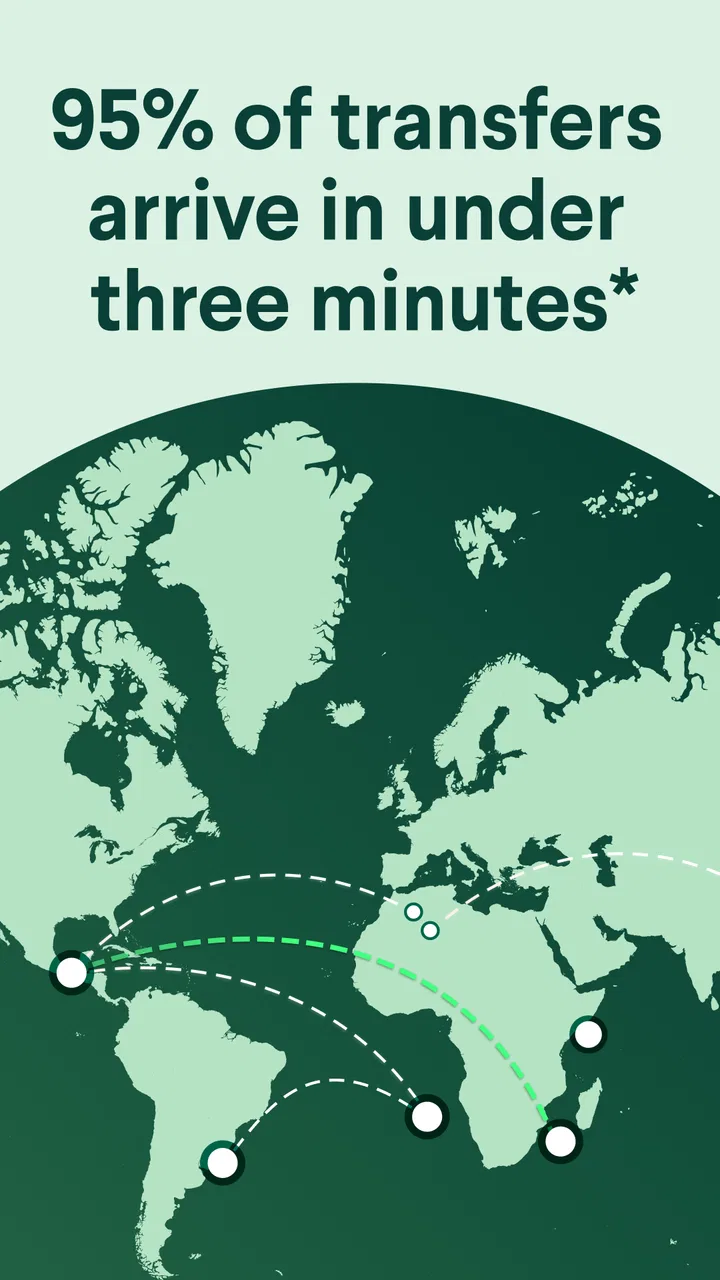
The transfer times with Taptap Send are generally quick, with many transactions completing within minutes. However, the exact time may vary depending on the recipient's location, the selected payout method, and local banking hours. Users are notified of estimated delivery times during the transaction process.
Pros
- Fast and reliable transfers.
- Intuitive user interface.
- Low transaction fees.
- Multiple payment options.
- Real-time exchange rates.
Cons
- Limited destination countries.
- Occasional app glitches.
- No cash pickup option.
- Requires internet connection.
- Verification process can be slow.

Taptap Send: Money Transfer
Gallery